
The Gancini Motif: A Hook With a Recorded Debut
The origin story of a fashion motif is usually vague. Somebody’s grandmother, a saddle fitting, a ship’s rope: the details shift, nobody can pin a year, and the house is usually happy to leave it that way. What makes the Gancini exceptional is that it can be dated. A photograph of a Ferragamo bag with a hook-shaped metal closure ran in Women’s Wear Daily in 1972, and that image is the motif’s first documented appearance, verified through the brand’s own foundation. In this industry, a hook that comes with a paper trail is an unusual thing. It also explains the weight the Gancini still holds across Ferragamo bags today, from an $880 clutch up to a python handbag several times that price.
1972, and why the date is remarkable
Understanding the date means knowing how young the leather goods still were at that point. Salvatore Ferragamo built the house on footwear from 1927; bags only began in 1965, when Fiamma Ferragamo started designing them as accessories to the shoes, and the first press article featuring a Ferragamo bag is dated 1969. The hook therefore arrives in the trade press barely three years after bags became a story worth reporting at all. Timing is the point: the motif was not retrofitted onto an established handbag line to conjure heritage. The motif landed while the category itself was still being invented inside the house, serving as a working closure on a working bag. Motifs that begin as functioning fastenings tend to see off those that begin as ornaments, and this one has.
Gancio or Gancini? Both belong to the brand
The question of which spelling is right comes up constantly, and the honest answer is view collection that both belong to the brand. Loosely speaking, gancio is the single hook and gancini is the plural — the motif, or the family. In practice Ferragamo uses the two fluidly across its own product copy. Current descriptions mention two golden Gancio buckles on the Hug XS and an iconic Gancini closure on the Cara — same season, same site. Neither is a typo, and neither signals a different product line. If you are searching a resale platform, try both, because listings inherit whichever word the seller copied off the original tag.
What the hook really does on a bag
The motif has three distinct jobs in the collection, and they are worth separating. First comes the clasp: a piece of cast metal that genuinely opens and closes the bag, which is how it appeared in 1972 and how it appears on the Cara today. Second it works as applied hardware — a plate, buckle or chain link that carries the visual weight without carrying the closure, as on the Hug’s wrap straps. Third comes pattern: embossed, outlined or woven across leather, canvas and jacquard, turning the hook a surface rather than a fitting. Those three registers let one motif run from an entry-level clutch to the top of the range without repeating itself. It also explains how two Gancini bags can look nothing alike yet still come across as the same family.
Where you come across it in the current collection
The most affordable way into the house is the hook, and it is worth putting that plainly. Most first purchases fall inside the Double Gancini group, which runs from a clutch at $880 through mini shoulder bags at $1,250 to $1,490 and a mini bag at $1,350, up to a top handle XS at $2,500 and crossbodies at $2,400 to $2,900, one of them observed as low as $830. Above that sit a Gancini chain mini at $1,850, an outline tote at $1,750 to $1,850, a wallet with chain at $890 and a folded chain clutch at $1,790. The family’s ceiling is a medium Gancini handbag in python with golden hardware, suede lining and a custom key fob at $4,100, listed at 7.2 inches high, 13.3 long and 4.7 wide, with a 21.7-inch strap and an 8.9-inch handle drop. All of these are observed 2026 market prices recorded on the brand’s own United States site on a single day, not an official price list. The table traces how the motif takes new forms as the price climbs.
| The piece | How the motif appears | Observed 2026 market price |
|---|---|---|
| Double Gancini clutch | Cast hardware clasp | $880 |
| Gancini wallet with chain | Hardware closure plus chain link | $890 |
| Double Gancini mini shoulder | Hardware clasp | $1,250 to $1,490 |
| Gancini outline tote | Outlined motif over the body | $1,750 to $1,850 |
| Double Gancini top handle XS | Working structural clasp | $2,500 |
| Gancini handbag, medium, python | Golden hardware over suede lining | $4,100 |
The Vara confusion
One correction has to be made here, because the error circulates constantly. The Vara is a shoe, not a bag. Created in 1978 by Fiamma Ferragamo, the low-heeled pump with its grosgrain bow has sold more than a million pairs, and it belongs entirely to the footwear side of the house. It is not a handbag line and never has been, so any reference to a Vara handbag collection is simply wrong. Now and then the bow reaches leather goods as a borrowed detail, most conspicuously on the Ginny — a Vara-plate bowling bag that turns up in resale rather than in the current line-up. Keeping the two apart is useful when you shop pre-owned, since a listing that calls the Vara a bag was written by somebody who did not check.
Reading the hardware
Because the hook is cast metal, it is the part of a Ferragamo bag people examine most closely. Finishes are predominantly gold-tone, with silver-tone on a minority of pieces, and gold-tone plating is exactly that — plated rather than solid — so abrasive cleaners are a bad idea. Beyond that, it is worth being clear about what the brand does and does not publish. Ferragamo issues no public authentication guide, and its only stated guidance is to buy from its own website or from authorised stores and distributors. What follows is community consensus among pre-owned buyers rather than anything the house has confirmed, and it should be treated as soft signal only. The brand’s nearest official equivalent to an in-person check is its Repair Services, offered for a selection of authentic products at selected boutiques with proof of purchase.
- Crispness, spacing and spelling of the interior leather-tag stamping.
- Weight and casting standard in the Gancini hardware itself.
- The regularity of the stitching along edges, gussets and straps.
- The hand-feel of the leather measured against known examples.
- The white dust bag and its red drawstring.
The hook second-hand
Gancini pieces do differently second-hand from the house’s headline silhouette, and the gap is telling. On a major platform in September 2026, a medium Gancini turnlock flap sat at $1,130 to $1,190, a Gancini Margot hobo $1,020, a medium jacquard Gancini shoulder tote $935 to $1,045 and a small Gancini crossbody $690. A vintage Gancini flap shoulder bag in medium was listed at $560, close to the archive floor. The exception was a large Trifolio tote in embossed Gancini at $2,040, the top of the archive band, in a style no longer in the United States line-up. So the hook holds a broad, steady band of roughly $560 to $1,200 rather than a sharp peak. Brand-operated stores inside outlet villages stock Gancini pieces as well, yet there is no official online outlet at all, so any site presenting itself as one is not the brand.
What a documented birthday is worth
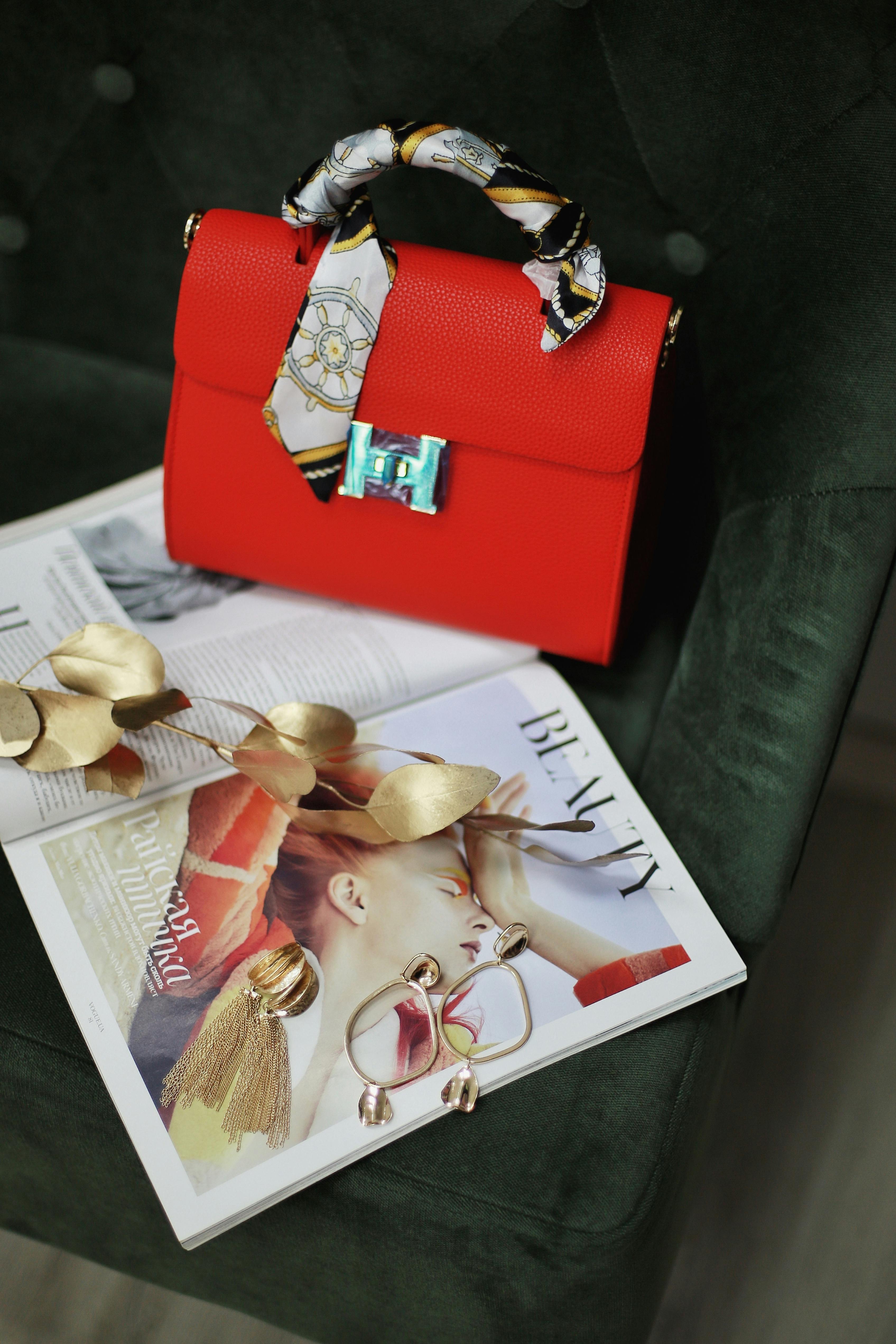
Filing the 1972 photograph as trivia would be understandable, but trivia it is not. Because the first appearance is dated, the motif can be documented rather than merely announced — uncommon enough in fashion to count for something. It also means the hook predates almost every current Ferragamo bag by decades, so a Gancini clasp on a 2026 shoulder bag is genuinely continuous with the archive rather than a revival of it. For a buyer, the continuity is the working argument: a motif this embedded is unlikely to be quietly dropped, and pieces carrying it stay legible across seasons. Whether you are browsing a Ferragamo shop, waiting for a seasonal Ferragamo sale, or scanning listings that resale platforms still file under Salvatore Ferragamo, the hook is the through-line. More than fifty years after a photographer pointed a camera at it, the hook is still doing the same job.